Thanks to advances in medicine, today we can count on innovative techniques to treat and eliminate the pilonidal cyst. And one of them, probably the one with the best results, is the Modified Karydakis Flap technique, which has proven to be an option highly effective surgery.
Next, we will detail what this innovative surgery consists of, what benefits it offers, what the recovery is like and who are ideal candidates to undergo this procedure.
Modified Karydakis flap: what it is
The Modified Karydakis Flap is one of the best surgical techniques for pilonidal sinus.
So much so that it has now become the preferred option due to its high success rate and low recurrence rate.
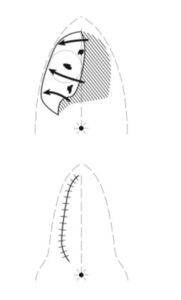
In this technique, the surgeon creates an elliptical V-shaped closure in the affected area, with the aim of eliminating the cyst and affected tissue more completely and efficiently.
This V-shaped closure allows for better healing and reduces the risk of recurrence compared to other surgical approaches.
What does Modified Karydakis surgery consist of?
Modified Karydakis pilonidal sinus surgery is performed under local or regional anesthesia, allowing for a faster recovery and lower risk to the patient.
During the procedure, the surgeon makes an elliptical incision in the affected area, removing the cyst and damaged tissue.
Next, a flap of healthy tissue is created to cover the operated area and promote optimal healing.
Duration of surgery
This surgery usually lasts between 60 minutes to 90 minutes, depending on the size and complexity of the pilonidal cyst.
It is a relatively quick and outpatient procedure in most cases, which means that patients can return home the same day as the intervention.
Recovery after Modified Karydakis Flap surgery
Recovery after surgery with the modified Karydakis technique is generally faster compared to other surgical procedures for pilonidal sinus.
Patients may experience some discomfort and tenderness in the operated area during the first few days, but this is usually relieved with pain relievers and appropriate postoperative care.
Recovery time may vary depending on the complexity of the case, but in general, patients can return to light daily activities after a few days and resume more intense activities, such as exercise, after a few weeks.
Preparation before surgery
Before undergoing modified Karydakis surgery, it is important for patients to follow the instructions provided by their surgeon.
This may include eating and drinking within a certain period before surgery, stopping certain medications, and undergoing preoperative exams to ensure they are in optimal condition for the procedure.
The Karydakis operation achieves, with a simple and aesthetic technique, low recurrence and morbidity and definitive recovery after 15 days in the majority of patients.
What is the technology used in the Modified Karydakis Flap technique?
The modified Karydakis technique benefits from technological advances in modern surgery.
State-of-the-art surgical equipment, such as lasers and advanced suturing devices, help surgeons perform the procedure with greater precision and reduce surgical time.
Additionally, the suture materials used in this technique are biocompatible and safely dissolve in the body over time, avoiding the need to remove stitches after surgery.
Who can perform modified Karydakis surgery
Modified Karydakis Flap surgery should be performed by a specialist in coloproctological surgery with experience in this technique.
Surgeons specialized in this area have the knowledge and skill necessary to perform the procedure safely and obtain optimal results for the patient.
If you are looking for a definitive solution for pilonidal cyst, do not hesitate to consider modified Karydakis flap surgery from Innova Cirugía.
Click here and speak with our team of specialists to receive personalized attention.