How to cure hemorrhoids? The question of the century for those who silently suffer with this issue.
In this detailed guide, we will thoroughly explore what hemorrhoids are, their types, symptoms, and available treatment options.
From home tricks (that work to some extent) to medical procedures, this guide offers a comprehensive overview on how to manage and cure hemorrhoids effectively.
Let's talk about hemorrhoids...
Hemorrhoids are swollen veins in the rectum and anus that can cause discomfort, pain, and in some cases, bleeding.
For many people, it is an uncomfortable topic that they talk about in whispers with a few (or no one). Understanding it will be the first step in addressing the situation effectively.
Types of hemorrhoids
Hemorrhoids are classified into two main types: internal and external hemorrhoids.
Internal Hemorrhoids
They are located inside the rectum and, in some cases, can protrude or prolapse outward during defecation.
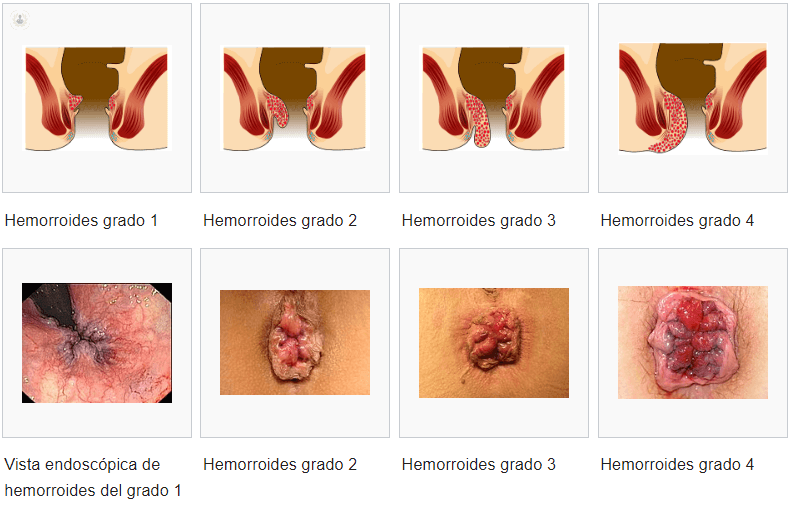
They are divided into four degrees according to their severity:
- Grade 1: Hemorrhoids are present, but do not prolapse.
- Grade 2: They prolapse during defecation but return to their initial position spontaneously.
- Grade 3: They prolapse during defecation and require manual reduction.
- Grade 4: They are always prolapsed and cannot be reduced.
External hemorrhoids
These are located around the anus and can be more painful, especially when sitting or during a bowel movement.
They often present as tender bumps.
Symptoms
The most common symptoms range from:
- Pain during or after defecation.
- Bleeding during bowel movements (bright red blood on the toilet paper or toilet bowl).
- Tender bumps around the anus.
- Stinging or burning sensation in the anal area.
- Discomfort when sitting for long periods of time.
- Mucous discharge around the anus.
Symptoms of the most severe degrees:
The most severe symptoms may vary depending on the grade of the hemorrhoids:
- Grade 3: Bumps that prolapse during defecation and require manual reduction.
- Grade 4: Bumps that are permanently prolapsed and cannot be reduced, which can cause significant pain, heavy bleeding, and difficulty maintaining proper hygiene.
These symptoms affect quality of life and require urgent medical attention.
How to cure hemorrhoids
Treatment can range from conservative treatments to surgical procedures. Here, we will explore some options.
Conservative treatments
In mild cases, hemorrhoids can often be relieved with lifestyle and diet changes. It is essential:
- include foods rich in fiber
- drink enough water
- maintain proper hygiene, and
- avoid constipation.
Additionally, sitz baths with warm water can provide relief and the use of topical anti-inflammatory creams can reduce irritation.
You may be interested in reading: 9 care for a healthy colon.
medical procedures
For more severe cases, medical intervention may be required. Treatments range from outpatient procedures to more invasive surgeries, and may include:
- Rubber band ligation
This procedure involves placing an elastic band around the base of the hemorrhoid to cut off blood flow and cause it to fall off.
- hemorrhoidal sclerosis
It is a procedure in which a chemical solution is injected into the hemorrhoid. This solution induces an inflammatory reaction that heals and reduces the size of the hemorrhoid.
Sclerosis is mainly used to treat grade I and II internal hemorrhoids.
- Infrared photocoagulation
This procedure involves applying infrared radiation to the base of the hemorrhoid to coagulate and sclerosate the vein, leading to shrinkage of the hemorrhoid.
Infrared photocoagulation is also performed in the office and is suitable for grade I and II internal hemorrhoids. It is often done without anesthesia and is a quick process.
- Laser hemorrhoidoplasty
It involves the use of laser energy to remove or shrink hemorrhoids. This procedure is performed under general or regional anesthesia and is most common to treat grade III and IV internal hemorrhoids.
- Hemorrhoidectomy
It is a surgery to remove severe hemorrhoids. It is performed under general or spinal anesthesia and is used to treat grade IV internal or external hemorrhoids.
During the procedure, the hemorrhoids are removed and the affected areas are sutured.
- Transanal Hemorrhoidal Dearterialization (THD® Doppler)
This technique uses a Doppler to locate and suture the arteries that feed the hemorrhoids. By reducing blood flow, hemorrhoids shrink.
It is an outpatient procedure and can be performed with local or spinal anesthesia. It is mainly used to treat grade II to IV internal hemorrhoids.
- Thermocoagulation with Radiofrequency (Rafalo® Procedure):
Radiofrequency thermocoagulation uses controlled heat to shrink hemorrhoids. A probe that emits radiofrequency energy is inserted into the hemorrhoid, reducing its size.
This procedure can be performed in the office under local anesthesia and is effective for grade I to III internal hemorrhoids.
Each procedure has its own indications and considerations, so it is essential to discuss with a health professional which is most appropriate depending on the degree and severity of the hemorrhoids.
How to cure hemorrhoids at home
While medical treatments are essential, home care also plays a crucial role.
Be sure to follow medical advice and consider these additional tips, which range from:
- Maintain adequate hygiene.
- Avoid straining during defecation.
- Eat foods rich in fiber.
- Drink enough water.
- Do not sit for long periods of time.
- Perform physical activity regularly.
Remember, if you have hemorrhoids with bleeding and pain, consult your doctor.